10 Essential Tips for Interviewing Candidates: 

Interviewing candidates is a critical aspect of the hiring process. As a recruitment agency, your role in assessing candidates goes beyond just reviewing CVs—you need to delve deeper to understand the person behind the paper. Here are ten essential tips to help you conduct effective interviews and select the best candidates for your clients.

1. Prepare Thoroughly Before the Interview

Preparation is key to conducting a successful interview. Before meeting a candidate, review their CV and cover letter thoroughly. Understand their background, skills, and experience. Research the role they are applying for and have a clear idea of what your client is looking for. Preparing specific questions tailored to the candidate’s experience and the job requirements will make the interview more focused and effective.

2. Create a Comfortable Environment

A comfortable and relaxed interview environment helps candidates feel at ease, allowing them to perform at their best. Choose a quiet, well-lit room with comfortable seating. Start with some small talk to break the ice, and explain the interview process to the candidate to set the right expectations.

3. Ask Open-Ended Questions

Open-ended questions encourage candidates to provide more detailed and informative answers. Instead of asking yes or no questions, ask questions that begin with “how,” “why,” or “can you describe.” For example, “Can you describe a time when you had to overcome a significant challenge at work?” This approach helps you gauge their thought processes, problem-solving skills, and ability to communicate effectively.

4. Listen Actively

Active listening is a crucial skill for interviewers. Pay attention not just to what the candidate says, but also to how they say it. Non-verbal cues, such as body language and tone of voice, can provide valuable insights into a candidate’s confidence, enthusiasm, and honesty. Avoid interrupting and give candidates enough time to express their thoughts.

5. Assess Cultural Fit

While skills and experience are important, cultural fit is equally critical. Ask questions that help you understand the candidate’s values, work style, and how they handle team dynamics. Understanding how well a candidate aligns with your client’s company culture can predict their long-term success and satisfaction within the organisation.

6. Evaluate Problem-Solving Abilities

In today’s fast-paced work environment, problem-solving skills are invaluable. Present candidates with hypothetical scenarios or ask them to describe a situation where they had to solve a complex problem. This will help you assess their critical thinking, creativity, and decision-making abilities.

7. Check for Adaptability

Adaptability is a key trait in the modern workplace. Candidates should be able to demonstrate flexibility in their thinking and approach to challenges. Ask them about a time when they had to adapt to a major change at work, and how they handled it. Their response will give you an idea of how well they can handle change and unexpected situations.

8. Gauge Passion and Enthusiasm

Passion and enthusiasm can often be the difference between a good candidate and a great one. Ask candidates what excites them about the role or the industry, and listen for genuine enthusiasm. A passionate candidate is more likely to be engaged, motivated, and committed to their job.

9. Conduct Behavioural Assessments

Behavioural interview questions are designed to assess a candidate’s past behaviour in specific situations. The idea is that past behaviour is a good predictor of future performance. Use questions like “Tell me about a time when you had to work under pressure” or “Give me an example of when you went above and beyond for a client.” This will help you understand how candidates handle stress, conflict, and other common workplace scenarios.

10. Provide Clear Next Steps

At the end of the interview, thank the candidate for their time and explain the next steps in the hiring process. This includes when they can expect to hear back and what the subsequent steps might be. Providing this information shows professionalism and helps manage the candidate’s expectations.

Interviewing candidates effectively is both an art and a science. By following these ten tips, you can enhance your interviewing skills, making better hiring decisions for your clients. Remember, the goal is not just to fill a position but to find the right fit—someone who will contribute to the organisation’s success and grow with it. If you need assistance with the hiring process in any way, please fill out the contact form and book in a free consultation.


New Month, New Financial Year. Tips on How to Improve Employee Motivation!

Employee motivation strategies is the driving force that encourages your workforce to perform at their best and contribute to your organisation’s goals. It plays a key role in boosting retention, enhancing productivity, and strengthening workplace culture. At The Epiphany Group , we understand that financial incentives are not always an option – especially when budgets are tight. That is why our HR team has outlined practical employee motivation strategies to help you recognise and reward your team in meaningful ways, even without salary increases or bonuses.

1. Create personalised employee motivation strategies

It’s important to identify and recognise what motivates each individual employee. Ask for feedback from each employee to ensure the rewards you offer will motivate them.

2. Use appreciation as one of the most powerful employee motivation strategies

A genuine and heartfelt ‘thank you’ can be highly motivating and make an employee feel appreciated.

3. Improve work-life balance through flexible employee motivation strategies

Work-life balance is high on employees’ agendas. Improving work-life balance can significantly contribute to enhancing employees’ experience.

4. Recognise potential with career progression

Career development opportunities show employees you are invested in their future. Promoting internally is one of the most long-term employee motivation strategies that also supports retention.

5. Introduce new challenges to keep motivation high

Opportunity to work on more challenging or varied work and expand their skills may be more meaningful.

6. Offer merit-based achievements when pay increases are not possible

Acknowledging merit through promotions or new responsibilities supports your culture of performance and is an impactful employee motivation strategy in tight financial periods.

7. Prioritise learning and development as motivation tools

Offering ongoing learning and development opportunities can be a great way to reward top performers and enhance their emotional salary.

8. Incorporate flexible working into your employee motivation strategies

Flexible working options are very important to today’s skilled professionals.

9. Reward with extra time off instead of bonuses

If budgets are tight, offer leave-based rewards. A bonus day off or an extended weekend recognises effort while supporting wellbeing – a creative and cost-free employee motivation strategy.

In today’s tight talent market, candidates look for jobs that will contribute to their overall wellbeing and happiness. While salary is an important factor when choosing a job, an employer who also offers desired benefits beyond money can help secure a desired candidate.

Why is motivating your workforce so important for today’s corporate environment?

  • Improved employee well being
  • Enhanced performance and productivity
  • Competitive advantage
  • Achieving good results
  • Lower levels of staff turnover

How Employee Engagement Surveys Can Help a Company

Overview

Employee Engagement Surveys are an invaluable tool for organisations, creating an ongoing dialogue between a business and its employees by allowing for anonymous and transparent feedback. By using an anonymous questionnaire that incorporates a range of question types across various aspects of work, Employee engagement surveys ensure that organisation are best positioned to identify areas of strength and weakness, and respond accordingly. Ultimately fostering a positive organisational culture built on transparency and trust, whilst bolstering employee satisfaction, motivation, and retention.

Components of an Employee Engagement Survey

  • Facilitation Survey:
    Creation and distribution of a questionnaire, adapted to organisational context and needs. Utilising a diverse range of question types such as, likert scales and open-ended responses, and ensuring anonymity to elicit honest responses from employees.
  • Data Analysis:
    Quantitative and qualitative methods are employed to analyse survey responses, allowing for the extraction of insights into employee engagement.
  • Recommendations:
    Drawing from survey results, supplemented by industry knowledge and market trends, actionable recommendations are proposed, addressing key areas of improvement.

Benefits of Employee Engagement Surveys

  1. Utilise Anonymity to Elicit Honest Responses
    Employee Engagement surveys provide an anonymous platform for employee feedback, eliciting candid and honest responses without fear of reprimand or judgment. This ensures the accuracy of the insights and best position organisations to respond accordingly.
  2. Insight into Employee Satisfaction
    The insights generated by Employee Engagement surveys provide a gauge of employee satisfaction levels across a vast range of categories, which include, but are not limited to; job roles, team dynamics, compensation, benefits, and organisational culture. Analysis of these insights allows for the identifications of patterns and trends that highlight areas of strength and weakness.
  3. Identification of Areas for Improvement
    The identification of areas where employees feel disengaged or dissatisfied. Whether it’s inadequate communication channels, insufficient training opportunities, or concerns regarding workload and work-life balance, surveys provide actionable data that enables organiSations to prioritiSe and address these issues effectively.
  4. Enhanced Communication
    Employee Engagement Surveys facilitate open communication between employees and management by providing a structured platform for feedback exchange. By soliciting input from employees at all levels, organisations demonstrate a commitment to listening to their concerns and ideas, fostering a culture of transparency and trust.
  5. Increased Retention and Loyalty
    Engaged employees are more likely to feel a sense of belonging and commitment to their organisation, reducing employee churn and associated costs. By addressing concerns raised in employee engagement surveys and implementing initiatives to improve job satisfaction and work environment, organisations can foster loyalty among their workforce, contributing to organisational stability and success.
  6. Boosted Productivity and Performance
    A heightened sense of engagement amongst employees translates to increased productivity, efficiency, and overall performance, driving organiSational success. Ultimately generating greater commitment to organisational goals and improved overall performance.
  7. Informed Decision Making
    Employee Engagement surveys allow for the creation of targeted initiatives, more efficient resource allocation, and priority identification through the analysis of survey data. Overall this ability to generated well informed decisions based on survey data is a key benefit of the surveys that can promote continuous and targeted improvement

Human Resource Planning for Competitive Advantage

It’s well researched that an organisation’s success is largely dependent on the actions of the people within it. It follows then, an organisation with capable, committed, and forward-thinking employees is a force to be reckoned with. It also has a greater chance of staying ahead of its competitors. With this in mind, it’s easy to understand why an organisation’s most valuable asset is its people.

In a globalised world with relentless competition and ever-increasing pressure to innovate while reducing costs, it’s never been more crucial to manage our assets as effectively as possible. Especially so for human assets, as wages are a business’ biggest expense.

In fact, strategic human resource planning is a proven competitive advantage.

So, if people are crucial to your business’ success, how do you attract, motivate and retain your best talent? Equally as important, how do we organise our people to maximise productivity and ensure we meet company goals? Finally, how do we make sure our employee practices run smoothly and remain compliant in an increasingly regulated business environment?

This is a daunting feat, but possible with a good plan.

More specifically, a good Human Resources Plan.

What is Human Resource Planning (HRP)?

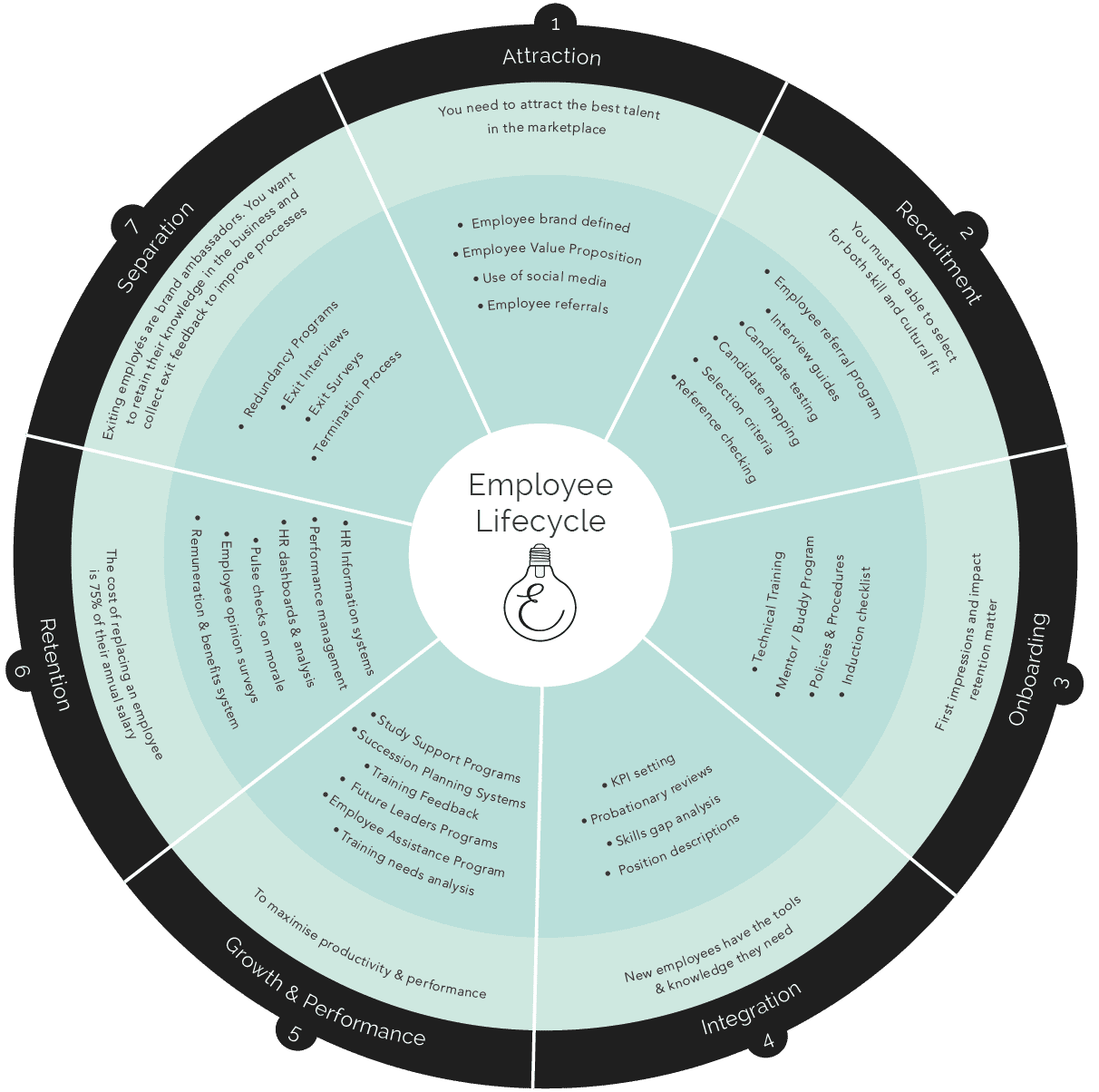
Human Resource Planning is the process of deciding how an organisation will meet its business goals and customer needs through its people. It ensures the company has the right people in the right roles. It also helps avoid having too many staff or not enough. The goal is to match capability with demand at the right time.

HR Planning covers all aspects of employee management, from hiring to training, and everything in between. More importantly, it gives a company the opportunity to properly address their IR employees’ concerns and make their job more satisfying.

A Human Resources Plan (HR plan) closely aligns with the overall business plan. However, the two are not the same thing. The HR plan aims to leverage human capital to respond to business challenges and achieve company goals. Therefore, it supports the business plan but doesn’t form part of it.

For an HR plan to be effective, the organisation needs to consider both internal and external factors. Organisations also need to analyse in-depth the business’ strengths and weaknesses. In other words:

What do your people do well, and what could they do better?
How do you bridge the gap between where you are now and where you want to be?
What skills will you need, and how do you go about acquiring them?
Do you provide training for existing staff, or should you look to hire for new skills?
These are all important questions and should be considered within the context of the greater business environment in which the organisation operates.

Complying with Employment Laws through Policies and Procedures

Of course, the HR plan involves hiring decisions. However, it also involves developing many policies and procedures that are central to the functioning of a business. People are complex, and handling employee-related issues is complicated. Despite this, many businesses struggle when dealing with staff interpersonal issues. If sensitive matters are not dealt with quickly and decisively, they can develop into costly lawsuits that can be extremely disruptive.

Employers need to be aware of their compliance obligations around issues like bullying, harassment, diversity, inclusion, health and wellbeing. Therefore, the HR plan is put in place to maintain employee satisfaction and minimise employee-related disruptions to the business.

With so many variables, the HR plan should be constantly adjusted to respond to changes in the internal and external business environments. This ensures the HR plan remains relevant and hence positions the business well for success into the future.

Every business should prioritise their HR plan. In the words of billionaire resort magnate, Steve Wynn “Human Resource isn’t a thing we do, it’s the thing that runs our business”.

Our Six Top Tips for HR planning:

  1. Determine your current talent pool
    First thing’s first, it’s important to assess the skills and capabilities of your current staff. This will give you an accurate understanding of the manpower behind your organisation. If you don’t have a good idea of where you are now, it’s difficult to determine what’s needed to reach organisational goals.
  2. Forecast HR requirements
    It’s the HR department’s responsibility to make sure the organisation has the right people, in the right place, at the right time. The best way to achieve this is by carefully considering the future landscape of the organisation and pre-empting the needs in the coming months and years. Performing this step will help you to make a more educated decision when it comes to hiring new staff or training existing staff.
  3. Integrate the HR plan with business strategy
    As we’ve already established, the HR plan supports the business plan and overall strategy. The business strategy is important as it involves understanding the “why” for the business and establishes the goals for the future. As the HR plan involves all areas of the business, if the right talent is not positioned to achieve the organisational goals, the business plan will likely fail.
  4. Create a strategy to meet the HR forecast
    Once the HR forecast has been established, we need to determine how the organisation will meet the forecasted demand and supply of talent. The key areas of focus here are talent acquisition, retention and upskilling. Important factors to identify are the recruitment schedule, who will take charge of recruitment, what methods will be used and what the onboarding process will look like.
  5. Set recruitment selection guidelines
    It all starts with hiring the right person for the job. Selection guidelines should be carefully tailored to the vacant role, meaning potential candidates have the right experience and educational background and the interviewer asks the right questions.
  6. Staff policies and procedures implementation
    Management and staff need to be aware of the correct procedures to follow as matters arise during the course of business. For example, written documents such as human resources manuals and employee handbooks should be easily accessible for all relevant staff members. This encourages best practices throughout every department of the business and lowers the likelihood of legal issues arising due to a breach.

HR Planning is not a once a year set and forget exercise. It’s a critical part of an organisation’s success. HR Planning enables you to harness your organisation’s greatest asset and cost, and a key competitive advantage. How well you hire, onboard, manage and train your people greatly impacts your organisation’s ability to compete in the marketplace.