How to Scale a Business Without Losing Its Culture
About this episode
The business that got you here might be the very thing holding you back.
Growing a business brings a new set of challenges. The leadership, systems and processes that got you here might not be enough to take you to the next level.
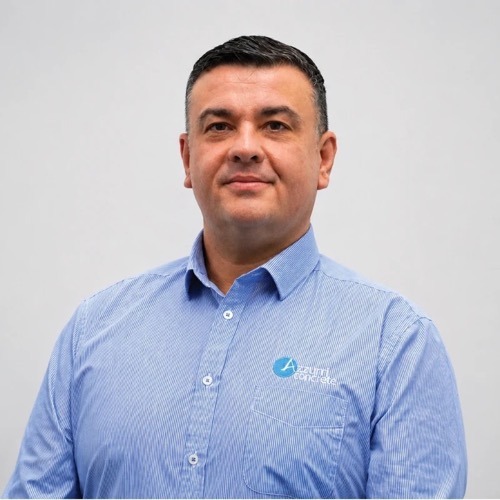
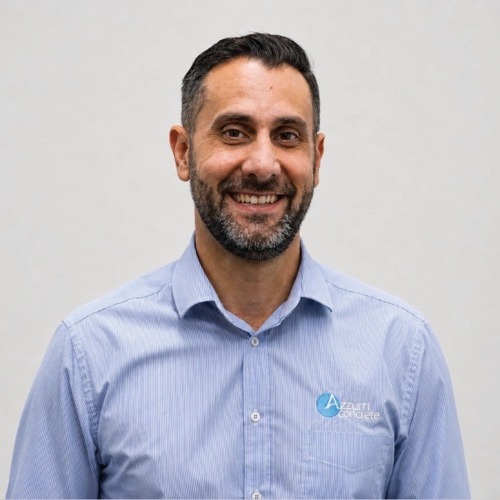
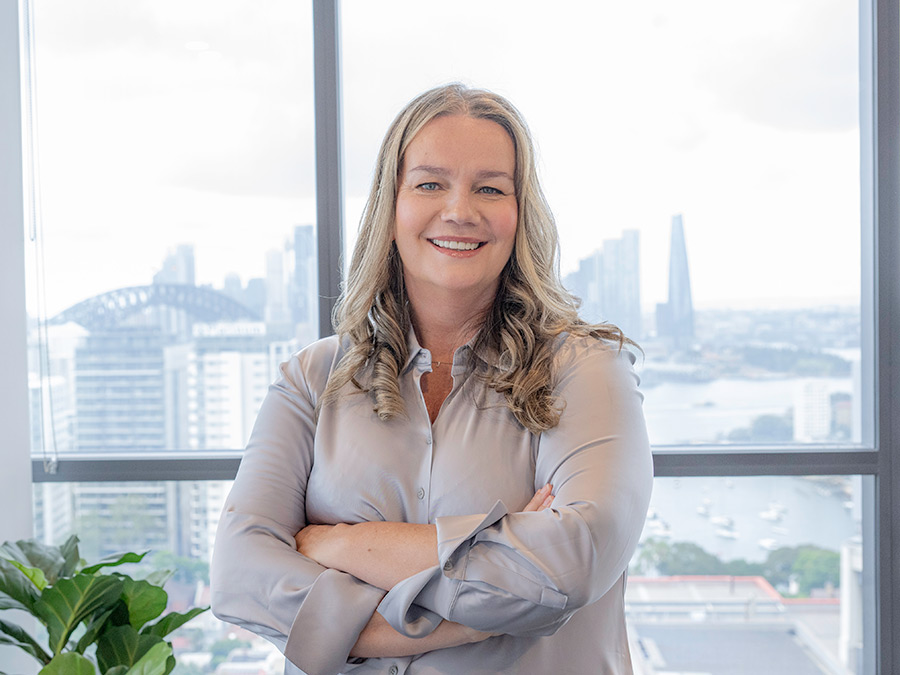
In this episode, Jon Simmons sits down with Donato D’Angola, Managing Director of Azzurri Concrete, Finance Director Alex Karpouzis and Janine Williams, Founder and CEO of The Epiphany Group, to explore how a growing business can evolve without losing its culture.
Over nine years, Azzurri Concrete has grown from a two-person operation into a business with more than 100 employees. Along the way, the team has had to rethink its leadership structure, improve financial visibility, make difficult decisions about people and productivity, and give employees the tools and autonomy to succeed.
Scaling a business means changing how you run it
They discuss why growth exposes weaknesses in a business, how to build a leadership team with a shared vision, and why business owners need to recognise when the skills that got them here are no longer the skills needed for the next stage.
The conversation also covers hiring for the future, developing emerging leaders from the ground up, and building systems that let people do their best work. Because sustainable growth isn’t just about having a bigger business. It’s about building a business that can keep growing.
Key takeaways
Growth needs a different way of running the business
The systems, leadership structure and processes that work for a small team can start to break down as a business expands. Sustainable growth means recognising when it’s time to change how the business operates.
Scaling means developing people, not just growing the business
Hiring for future needs, developing emerging leaders and giving employees the tools and autonomy to succeed helps a business grow without relying on a few people to do everything.
Better decisions start with transparency and alignment
Clear financial information, useful performance measures and a shared vision help leaders make difficult decisions and keep the business moving in the same direction.
In this episode
- 00:00Hitting the growth wall
- 04:29The “no dickhead” policy
- 06:59The alignment workshop: uncovering the real challenges
- 12:46Building the right team to scale
- 15:20Restructuring for productivity
- 16:41Letting go as you grow
- 23:44The tough conversations that drive change
- 28:55Radical financial transparency
- 31:05Using KPIs to drive better business decisions
- 40:04Planning for national expansion
Jon
Every growing business hits the same wall. The way it’s run stops matching the size it’s become. Azzurri Concrete has hit that wall more than once. Two founders, then clear ownership, a leadership team and systems and training across the whole business. Now it’s planning what comes next. Today we go back over that journey, what changed, how the team knew it was time and where outside support came in. I’m Jon Simmons, brand and content consultant, and this is Before The Epiphany with me, our donato, managing Director of Azzurri Concrete, Alex Azzurri’s, finance director, and Janine, founder and CEO of the Epiphany Group. Janine, let’s start with you. It’s nice to see you again. Thanks for coming back in. Thanks. Um, when you talk about the, the problems of, of a growing business, um. What do you see?
Janine
It’s interesting, I think when you think about how businesses grow, it’s certainly not lineal. Um, they, they tend to go through stages and, and when you’re looking at businesses, you are really trying to understand what stage it’s at to then understand what type of leadership and what type of structure that type of business needs. Um, it’s also important to really understand the industry, but not get so hung up on the idea that my business is so unusual because of the industry and so unique because of the industry. Most businesses, when they’re growing, kind of go through similar challenges as they go through each stage. Um, and they face those challenges, um, in different ways, depending on the capability of the people within the business, but also the mindset often of the leaders. Um, and so that, that is something when you, when you’re looking at a business that’s looking to grow, we’ve gotta look at the capability of the leadership team. We’ve also gotta look at the capacity of the people who need to drive that business forward. So they’re the things we’re, we’re really looking at in the beginning, those two things.
Jon
Yeah, sure. And so Don, when you first started with the Epiphany Group, how did that relationship come about? Why did, why were you looking?
Donato
I think for me, when I first started with the Epiphany Group, it started because I was looking for something in regards to how do we become a better manager or dealing with people’s and other people’s understanding in the business field like that. From my point of view, I came from a construction background bit of, um, admin work. But you know, you, you go through businesses and like Janine said, you know, you start at different points in your business and we built the business up to start to get bigger and more employees started coming into the office. And then you start realising that there’s like, you know, people wanted to have a chat to you about something else. Then there was strategizing and there was, and it was no longer just doing the same things that we were always doing. So I just started googling one day, like general manager, what’s a general manager’s course, and then I come this epiphany popup, I was like, well, that’s a good name. Epiphany. Great. I just put myself in for the course. And then I, um, enrolled and then it was like one day a month for like six months, and I just went to the first session. It was in the city somewhere. Didn’t know, nobody sat in a room with all these other people that wanted to become general managers or being told to go do this course. So to become a better manager. And just through that, just listening to other people and yeah, learning from what the course offered. That’s when I started getting, um, sort of like chatting to Janine after. It was like, oh, this was easy. Like I understand that now, sort of thing. So then after that she reached out and said, I wanna come visit you in your office. I wanna have a chat to you. I said, oh, okay. So that’s how we first started our working relationship’s. Gotta be, oh, I’m gonna say about eight years, maybe. Oh, close to nine. Nine, yeah, nine years ago. So that’s how it started.
Jon
So when you went into the office, what were you looking at? Were you looking
Donato
for I was. Yeah, call it how it is, Jon. But when she came to the office, I was being interviewed, so she came in, in the boardroom. She asked me why was he doing the course? What’s your ambitions, how many employees you have? And there was all this sort of stuff. And then I came the spill business coach and I was like, what’s this business coach? She got business partners. And I started listening to it and I was like, okay, interesting. Okay, maybe then a business needs to be coached, not just the person. And that’s how we ended up, you know, becoming our business coach for a very long time.
Jon
Nine years. In
Donato
nine years. Yeah. So I passed the interview.
Jon
Yeah, you did. Well, I did. I’m not surprised. Yeah. Yeah. So as that, that relationship expands, how does that work? In inside the Epiphany Group?
Janine
Yeah, look, it’s interesting with the General Managers programme, which we still run a couple of times a a year, um, often what people are looking for are the types of clients that Epiphany tends to work with. Um, and, and those clients are the types of companies that are looking to grow, looking to scale often. Um, we work with leaders, obviously in various industries. What we don’t do is work with competitors. And when Donato joined the programme, we had one of the trainers reach out to me and say, I think there’s someone here that you need to come and meet. And I don’t think it was actually the first couple of, um, modules that Donato had completed, um, that I could actually get there. Um, and then by the time I ended up going to, to meet Donato, it was an interesting conversation. We just started to talk about the business, the industry. We knew people. Um, we had, you know, people that we knew in common. Um, and we were just talking about basically, you know, his business, some of the challenges, why he enrolled in the programme in the first place. That gave me enough to understand that it was probably gonna be the type of company we want to work with. We, we do absolutely look at the leaders to understand whether or not, you know, first of all, we can work with them. We, at Epiphany have got an absolute no dickhead policy. Um, we just, we’re not interested in working with companies or, or helping companies grow, where the leaders themselves are not fundamentally, you know, good people, um, people with high integrity and, and the types of values that Epiphany, you know, stands by today. The types of values that when we first started 15 years ago, we sat down and we said, well, these are the non-negotiables for us in terms of the clients we’ll work with. And I think that that’s actually really been good for Epiphany over the years. Um, so when we first sat down with, um, the guys at Azuri, I was sitting there being like, there is absolutely, you know, every chance that we’re gonna work well together, um, to achieve their goals because of how, you know, Don is as a person. And, you know, he, he leads from the front. He, he’s, he very much wears his heart and his sleeve. He’s a really good person. He’s a really good leader. Um, and I think in that sort of first initial phase, it, it was really, really clear to me that, you know, we would work well together.
Jon
So I’m glad you passed the smell test. That’s good. But, and
Donato
also the no dickhead test, so I’m happy with that
Jon
one. You get a badge two for two. That’s very good. That’s very
Donato
good.
Jon
At what point did the, the ex sort of the expanded relationship move from Don to the, the broader company itself?
Janine
Yeah, look, one of the first things we would do with any business, and we certainly did it with Azuri, was run an alignment workshop. And so we ran this alignment workshop with the, the partners to really understand where the business was at. Um, try to really unpack some of the challenges that existed within the business. And, and that’s quite an informative process because you are quite literally walking into someone’s business and saying, show me everything. Let me look at your financials. Let me look at your structure. Let me look at the behaviours that exist, you know, amongst the, the leaders. Um, and let me understand what’s actually, you know, going on here. So to do that literally within a couple of meetings for, for someone to trust you as much as what they did, I always say it’s genuinely a privilege when you walk into a room to run an alignment workshop because people are there. To tell you everything. And so that puts you in a position of really having to be quite empathetic and quite, you know, aware on the day of the fact that people are at their most vulnerable about what’s happening in their business. And the nature of an alignment workshop is to get facts out on a table to establish the here position, but then you have to transition it into, well, where do we want to go? And that is where you also see the disparities. That’s where you start to see the, the, the different goals that, you know, people will have in relation to where they want to take their business, even where they think they can take their business. It’s, it always impresses me how humble people like Denardo, um, are about their capability and their potential. Um, and you are walk, you are walking into a room. Someone like myself, I’m looking at businesses, literally thousands of businesses a year now. And I’m, I’m looking at the leaders going, well, how far can you take this? What, what have you got within you to be able to drive this? Because fundamentally, you can have the right market, you can have the right product, you can have the right everything. But if you haven’t got a team at the top who are willing to do what it takes to drive a business to take advantage of all of those opportunities, then realistically it’s never going to achieve its full potential. So, in an alignment workshop, I’m also trying to see whether or not the leadership team has got the, the drive that, you know, the, the ambition to kind of take it to that next level. ’cause I’ve seen plenty of people with all of those opportunities fail because the people in the driver’s seat are not wanting to do what it takes to get that business to that next level. They just run out of energy care, factor time, whatever it is. But the alignment workshop was an important, um, turning point for me to, to work with Donato particularly, um, and, and the rest of the business. And so we worked from that alignment workshop into understanding what their systems and processes were like, where they wanted to get to with working with tier one builders was, um, you know, it was, it was necessary to look at their systems and their processes to get them ready to go and actually, you know, be able to do that type of work. And, and then from there, um, we then started to look at the, the senior leadership team. Um, and we started to understand the capabilities within the business, the people that, you know, had been there for a really long time and they were intrinsic to the company’s success. Um, and then from there we started to look at also the gaps where we would need to, to backfill, um, some, some capability in the business, um, at that leadership level. And so it naturally became this journey of, of talking about what was happening in the business, but then identifying things that would prevent the business from achieving its goals, and then helping them, you know, in the areas where we have expertise, um, to be able to help them set up for that, for that growth.
Jon
Yeah. Yeah. And what does that feel like? Laying it all on the table as a business owner?
Donato
Oh, it’s raw. It’s, she’s got this very unique thing, Janine, where she’ll ask the question and then stop and then wait for you to think about it. And some of these questions that Janine’s asked when you’re having these workshops and alignments sort of stuff, it’s, you, you know the answer deep down inside, you know the answer. And then she’s like, progs and pros. And then when you shoot the answer out, she looks at you like, you know, that’s lot, you know, like, low moment, whatcha gonna do about it now what’s the next steps you need to do? And it’s good because like, like sometimes you ask yourself and you question yourself about business and decisions you make and what’s the next step I should take and all this sort of stuff. But when you’re having these alignments with Janine and stuff like that, yeah, it’s, it’s really raw. Like, you really have to like ask yourself why, and then she might not talk to you for like a minute or two, then you’re sitting there going, well, what have I done wrong? And she’s like, well, you know what, come on. I go, oh, I’d have to do this. She goes, well, how are we gonna get there? And yeah, so they’re really, really good sessions. We’ve, we used to have, and you know, there, there wasn’t any tears. I don’t think there was any tears, but there was always a little bit of, you know, you know, maybe a little bit of, you know, push a little bit prong, you know, you to go a bit harder or you know, a bit bit more empathetic about some sort of things. And so, yeah, they’re really, uh, raw when I say that, if you’re emotional and how you think about things, and then how you look at perspective. Like, if you want to get to that level, there’s obviously things you need to do and you have to stop and you’re like, okay. And you ask yourself the questions and she’s like shaking her head at you and you’re like, I don’t wanna disappoint. You need, ’cause you know, she’s gonna get angry at me. So there’s all these things and yeah, and they’re, the type of sessions, they’ll go for an hour, sometimes an hour for like an hour. But then most of the times, like our, our sessions were like 10 minutes, like, oh, already done next week again. So yeah, they’re really good sessions.
Jon
So as you, as you thought about moving into that tier and, and going through the alignment process, what were the biggest takeaways, um, from that? Sort of filled those gaps between where you were and where you needed to be.
Donato
Oh, it was the just people like you really need to have good people around you. That’s what I worked out with, um, working with Janine and talking to her about how do you get to that next step. It’s not like you need to support the people around you. You need to give them the tools and the innovations to go and search the ability to find the next best thing out there in your industry, to bring it to the table, to elevate your business and all that sort of stuff. So, yeah, it’s not a, it’s, it’s allowing people in your business to be great. And that’s something that I learned from just chatting with Janine and understanding that and giving the people the ability to do great things. ’cause a lot of people, I don’t think, no one ever goes to work and go and have a, I don’t wanna do any good today. I think give the people the right tools and the right ability to do things and they will step out of, you know, and do great things for you. It’s great.
Jon
And they become invested themselves.
Donato
Invested. Yeah, that’s exactly, absolutely.
Jon
So when you speak about good people, Alex had been quietly, patiently sitting here.
Donato
Great
Jon
people. When did you get involved with, um, Don and
Alex
in Azzurri?
Jon
Yeah, sorry. Oh,
Alex
just a little bit of a three years ago I joined as the, the finance director, CFO. And it’s, it’s been a great journey to date. Um, yeah.
Jon
What did you find coming in?
Alex
Yeah,
Jon
about azuri.
Alex
Okay. When I came in, I think we were at a really interesting stage. It was the highest turnover Azuri was doing. And it was also, we were looking at the financials at the time, we were trying to reconcile how we making the, having the biggest growth we’ve ever had. But that wasn’t really resulting in the, the profits and the cash flow that we wanted. And we were doing our own, I guess, analysis within the first four or five weeks to go, what’s the story here? Um, it wasn’t anything uncommon. It was the environment of the time, um,
Donato
the construction industry. It is
Alex
construction industry. It was, yeah, we, you know, it was hit by the pandemic, correct. We then got inclement weather, we had fixed price contracts. So yeah, it was this high turnover, but not the same performance that we wanted. So that was my first six weeks. Um, and, and he came
Jon
back. So it was good.
Alex
Yeah, we came back actually
Jon
again passing the smell test. Nice stuff. Yeah. Yeah. Yeah. Very good. And, and what is the involvement with, uh, the Epiphany Group during that time? Is some of that kind of calming the waters and, yes, this is where you’re at now, but this is where you’re going.
Alex
I think it was just very honest and frank conversations, if I’m being truthful, Janine said the, you know, what you need to do. Um, to Don Mario and myself, she says, you have a plan, the plan’s logical. Um, which was a process of us looking at how do we become most productive. Um, what we’d done to date was we grew and as we grew, we grew with our employees, we grew with our fleet. But what we did when we did a bit of a deep dive is we, we realised that concrete isn’t a production line. You can’t hit the same concrete pour and targets every day. So you have to create a company that’s more blended. Uh, and that’s what we did where you structured a company on what our normalised turnover was per day, not per week or per month, per day. And we restructured the business that way, which was looking at our most productive fleet. And I guess the hardest part was looking at our employees and going, they’re all very good people. Um, but there are days where we have downtime and there are days where you’re pouring about 15 sites a day and you’re going down to seven and you’re gonna make the decisions that will, I guess, keep us growing and keep us developing. And that’s what we did.
Jon
As the company grows, you probably get farther and farther away from kind of the daily activity of the business. Does that change how you develop and, and approach your job as a general manager or the things you learned at the beginning? How does the distance from hands-on, um, change how you’ve developed and your perspective on being in charge?
Donato
Yeah, um, well that’s a great question from the fact that when you started a small concreting business with two people, and now it’s a big concrete business with over a hundred people, it’s an interesting thing. ’cause you always look at it as the, in, it was like, only started yesterday. There was only like two people. But now you’ve got all these employees and all these other responsibilities that they should be taking care of and that sort of stuff. You feel always like, oh, is everything okay? Okay. How can I help you? But you’re not really helping, you know what I mean? I think by letting go and giving the people the autonomy to make their own decisions, and I’m here to support you if you need anything, my door’s always open. I think that’s probably the way I’ve approached and last, well, whatever, many years, whatever it is. And I think every now and then you do get some questions about, you know, well, you had that opportunity to make that call, why didn’t you, and let’s talk about it sort of scenario. And yeah, so there’s, there’s days where it’s, yeah, it’s easier. And there’s some days like, well, no, we’ve lost an opportunity because no one picked up that phone call or responded in that manner or the timeline that, that, that customer wanted. So yeah, so there’s never the right moment to let go of business or get back into the business. It’s just that’s how we are, that’s how we offer it, I suppose.
Jon
So. Are you at the point where you wanted to be when you first started working with Janine and Epiphany Group?
Donato
Yeah.
Jon
Or still working through that
Donato
with, well, like Janine says, at that point in time when we started with her, this is where we wanted to be. I think we’ve, we’ve gone past that
Alex
definitely.
Donato
And now we’ve sat down with Janine again recently, only this year, and worked out what the next 10 years could look like and how, how and what, between now and 10 years, when should we stop and look back and say, are we on our trajectory? And if not, what do we need to do to change it? When are we gonna bring in more people? You know, all this stuff. So it’s constantly changing, constantly evolving. Yeah. I don’t think the first plan you ever set out is the end plan.
Jon
No, that’s right.
Donato
Yeah.
Jon
The, the best laid plans are the worst. Correct. Yeah, that’s right.
Donato
Definitely. Definitely.
Jon
Um, so in terms of the work that you’re doing as the CFO now,
Alex
yes.
Jon
Thinking about that 10 year horizon, what is it, what are the variables and things that you’re thinking about?
Alex
Yeah, it’s a great question. I think for myself, my role’s probably transitioned a lot from just being the everyday CFO and looking at the finances to now looking more holistically with Don and Mario about the future. And what I looked and what we speak about is how do we, how do we become more corporate without, I guess, losing the culture and the soul of what is Azzurri. And that’s, it’s a hard thing to, to navigate and that’s what Janine is helping us with. And how do you, I guess, have those systems and procedures make our people accountable and take ’em on a journey for growth? Is, is what I’m looking at. And I guess when I speak to Don and Mario, it’s not a, a one solution. It’s a lot of micro steps that will get us to a goal we’re looking at, and it’s trying to do it in a very logical way and doing it in a way that makes our employees come on the journey and, and be really invested, which they’ve been to date. Um, when you offer that little bit of incentive to try something different, be it through technology or a system or adoption of AI or anything, um, we have people that are, I guess, willing and wanting to, to help. Uh, and we also have Don and Mario who are always supportive of that and going, if that’s gonna help us get there, then let’s, let’s give it a go.
Jon
Yeah, I, I think, and we spoke about it in an earlier episode, that balance between growth and culture and, and sort of business perspective is not unique to Azuri or any business.
Janine
No, it’s interesting. And, and taking a step back, our team actually recruited Alex and I remember having the conversation, um, with Donato at the time around the type of, you know, CFO that they were looking to, to recruit. And I remember when we went through the first process sitting down and getting the brief really clear, um, about what it was they wanted in terms of the technical capability. One of the reasons why Alex was such a standout candidate was because of the fact that he wasn’t just good for the business where it was today. He was going to be good for the business as it, as it went through its next transformation. And I think we are starting to see, you know, the benefit not just of his obvious experience and, and talent as a CFO, but actually it’s almost like planting a seed for the future. You go and find the person that’s required for where they’re at, but actually they’re part of the, you know, the, the leadership team. And, and Alex has been that from day one of I’m at the front, I’m running with you. However you want to take this business or wherever you want to take this business, I’m gonna run with you. I’m gonna keep up with you. And I think that’s the thing, when you hire, you know, someone with Alex’s skillset, you’re not just hiring the technical capability, you’re also hiring the mindset of someone who understands what it is that you know, that the team actually want to achieve. And he’s prepared to do what it takes to get the business, you know, to that, to that next level. I think that’s the important piece as well, is when you are, when you are bringing someone in at that level, it’s really dangerous for businesses. You can, you can really get it wrong and it can really affect the business’s ability to grow. Um, but when you get it right, you, you know, because you actually see the business go through that transformation process. I’m not saying it’s easy, but you, it goes through that transformation process in a very, very different way than when you have someone who hasn’t got that capability, that foresight, that vision, um, that shared vision. And that’s what, you know, Alex, from the day he walked in, it was, it was like he was meant to be there. He, he formed a really solid relationship with Donato and Mario and, you know, the rest is history. They literally are this, you know, formidable team who have got this shared vision. And they might disagree, they might disagree on, you know, what they’re trying to do or even sometimes how they’re trying to do it. Um, but the why is always consistent. Like they know why they’re there. And, and I would say that the team never wonders, um, as to whether or not they’re aligned or whether or not they’re on the same page. The team understands that they’re all a unified front and they go out there and they lead like that.
Jon
It’s amazing when that happens. Yeah. I mean, there are lots of people who can do that job, but when you find that that mesh and that relationship that works, it’s, it’s magical almost. Yeah. All of that sounds rosy and wonderful, but I’m sure going back to kind of the, the origins of all of the, the alignment. There were probably some issues that came up that made that look like impossible or di incredibly difficult,
Janine
certainly challenging.
Jon
Yes, that would
Janine
work. Um, certainly just
Donato
nice way
Janine
challenging, certainly challenging. Look, we wouldn’t, we wouldn’t do what we do. Um, and I don’t think we would be as successful as what we are in working with companies if we were not prepared to look at the challenges, the real challenges that exist within a business. And, and that doesn’t matter where the challenges exist, to be honest. But I, I will always say that the biggest challenges always start at the top. And Azuri was no different. We had, we had, um, differences of opinion. We had different, you know, motivators, we had different visions for the business and where it could go to. And I think what it comes back to is when you are working with the executive and the senior leadership team, you are working with people who have got passion for, for the business and, and a and a desire to take it in a particular direction. And I think that when we come in, some of the hardest conversations I ever had with Donato, with, with Mario and with the senior leaders, was actually about the things that they were passionate about and where they were not feeling like they’d been heard, or they were not feeling though they were scared that, you know, the, the business was gonna head in a direction that they didn’t want it to head into. Um, and so you are having these one-to-one conversations. The phone calls that come through in the initial phase can often be at, you know, nighttime afterwards where there’s just this dump of, you know, frustration and, and you know, anger sometimes. And you, you’re sitting there listening to that and kind of going, okay, where is this actually coming from? Like, what is your intention? And yeah, there were, there were people that just didn’t fit the business anymore for where it needed to go to. And I think that’s one of the, the, um, unique pieces of Epiphanys. We’re not just developing a plan and saying good luck with implementing it. We are literally walking alongside these business owners to ensure that the business gets fairly represented amongst all of the different, you know, needs that everyone in the business has. There’s this very real thing that we always say we represent, which is, you know, the logo. We, we represent the company itself. Um, right, wrong, or indifferent. We are there to make sure that that business is, is represented in those conversations. And when you have got people who are passionate and people who are really, really, really good at their job. I mean, Azu Concrete is an award-winning business. It’s, it’s a company that’s recognised as being one of the best companies in the industry. So you’re not talking to people who dunno what they’re doing. You’re not talking to people who, um, haven’t got the vision or the ability to take it there. You are talking to a whole range of people who want it, but it’s about making sure that through the process you stay true to what is going to be best for the business. Which means sometimes people who are in the business don’t make it through to those next levels. And sometimes that’s our job to point that out and have that conversation around what got you here today is not going to actually get you to that next level. They’re tough conversations to have. I think I alluded to it, you know, in our previous episodes where you’ve gotta have some really tough conversations with people, um, about, you know, their intentions, about their abilities. And a lot of times that leads to a really great outcome. They invest more, they develop more, they they want it, they’ll, they’re prepared to put their ego aside, um, for what’s best for the business. And they will, they will do what it takes. Not everyone is gonna be prepared to do that, and that’s okay. That’s perfectly fine. But as long as we understand your North Star is always the business, it has to be because that’s what we’re there to, to represent.
Donato
And that’s, that’s tough.
Janine
Yeah.
Donato
Right? Yeah. Like you never start, like, when I came outta school, you never fought, be a general manager or of a big company, whatever, so you never thought of those processes. But if you think about, you know, if everyone’s aligned to be a successful company with this is what we wanna do, like be a really good concrete award-winning work for tier ones. Do the best we can do, go national, whatever, great. But there’s only some sort of ability that you could probably take it there. Then you just need to realise like, I need a better person to help me take me to that next spot. That’s a tough one. That’s the challenge. Yeah. And, and yeah, sometimes like people didn’t wanna understand that like, you can only go so far. Now it’s someone else’s with more ability that can take us to that next thing. And yeah. So if you, if you, if you’re business owners and everything’s aligned, that these are the steps and goals you wanna get to. But if you can’t, like you can’t get to that step. You need to allow someone that can get to that step, take you there. Be humble that, you know, you are there a part of the journey, but if you don’t have the ability to do it, it’s tough for some people just to say, I’m stepping outside. Make the next person do it.
Jon
Yeah, sure.
Janine
And, and I’m just gonna add to that as well. I think one of the things when I first came in, I have this, it’s an absolute, um, where everyone needs to understand where the company is at financially. It’s, it’s, to me, when you are talking about the type of growth plans we were talking about back then, it was absolute, um, mandate to ensure that everyone had access to the information that they needed to be able to make the right decisions and, and transparency, you know, I spoke about donatos integrity before and, and second to none in the industry. But what I will say is having access to information, understanding that information, and actually being prepared vulnerable enough to ask what would feel like a dumb question. It’s your business, right? And you’re sitting there and going, well, I need to understand this and I don’t understand that and I don’t have this information. And, and that, that whole transparency piece creates its own conflict as well, because all of a sudden you are having business owners having a look at information that they’re sitting there and kind of go, okay, well now I know that I understand that I’m gonna make this decision or that decision and that transparency, this whole idea of let’s get it all out on the table. Everything out on the table, because information is power. And within businesses, unfortunately, um, some people will take that information and hide it away, and they’re not actually informing the business owners of what they need to know, what they need to understand.
Donato
It’s not only business owners, it’s like even staff members. Yeah. They, they make decisions based off what they think is right, but they don’t make a decision what’s right for the business. So I think that’s one of the things when Alex came along, it’s like, well, let’s bring the teams in and understand that if you’re not doing this amount of productivity work per day, we are losing money. And unless staff members start understanding like the, the little, you know, the one percenters changes in your decisions, that’s when you don’t start making the right decision. So every time one of our guys go, yep, mate, we are gonna come tomorrow and do this little bit of staircase. And we’re like, no, it doesn’t work for the business. So that’s, that’s, yeah. Even starts from there all the way up to the top of where I sit every day. So,
Jon
very interesting. Well, I was, I was gonna turn to you next. Yeah. Um, because three, I think you said three years.
Donato
Yes.
Jon
Just sort of coming out of back end of COVID and Yeah. Yeah. And what was that like, kind of that first look.
Donato
Do a scene from Saving private Ride. Right. And they drop the thing and they’re running on the beach. Yeah.
Alex
There’s, oh look, I think the hardest part for me was having really honest and frank conversations with my two new employers and people that I highly respected and say, and brothers and brothers that you know, are brothers. Uh, and go, this is how I’m seeing it and, and these are the reasons of why I believe it’s this way. And what we did well together is I said, well, what part of, I guess of all financial literacy do you find that you understand when they provide you the information you get every month? Uh, and the answer generally was, I get a hundred page report that makes no sense. And I go, well, that’s probably not helping this business. So we just spent a bit of time talking about, well, what do you need to run a business that gives you the information? And we started a monthly and we’re now weekly. We have our weekly KPIs. We look at it, we know that they’re leading indicators. So if these things are happening, we’re not gonna be making the turnover or growing the way we want. Um, and that’s been a journey. So it’s been actually quite a exciting journey. Uh,
Donato
and it’s good to see the changes.
Alex
Absolutely.
Donato
Yeah.
Alex
Yeah,
Donato
definitely. We’ll see it probably like in a quarterly meeting or even end the financial meeting about the results for the year. And we’ll sit back and we’ll look at it and go, look where we’ve come in the last three years and look what we’ve done in the last quarter. And you know, we projected this for a quarter, but we’ve done this and it, and yeah, they, they’re the little trolls and tribulations that we actually sit back and go, yeah, we done our all we don’t wanna carry.
Jon
And I think a lot of that goes back to that open, honest. Bear it all truth, because that’s how you measure those
Donato
changes. Incremental. Not every conversation a good one, but no, every good conversation starts with, you know, something. So That’s right. Yeah. So, yeah, I think that’s important. Yeah.
Janine
Yeah. I think, I think one thing I’m gonna add to that, I think the fact that Alex’s values match, uh, Donatos and Marios is probably one of the most important things. Um, when you see them in a room, you know, disagreeing, challenging each other, um, it’s always done from that position of understanding that every person in that room is there for the right reason, for the same reason, and they actually want the same outcome. Um, but how they communicate what they need or what they want or what they believe is always going to be a pressure point. It’s always going to be, when you’ve got passionate people and smart people in a room, there are always gonna be inflexion points. And I think, you know, from time to time, that might result in a phone call to me from Alex or from Donnar or from Mario. We are hearing, hearing, you know, the, the, the event. And you can absolutely picture what’s gone down because I know them so well and I understand, you know, where they’re coming from and they’re, they’re often, um, coming at it, um, from the same intention. Um, but what needs to get done is actually what creates the, the tension, right? It creates the pressure is, is who needs to do what in order to achieve that outcome. Um, and I will say this, for all three of them, none of them like to be told what to do. So
Donato
you’re lucky not us here today because she, she’s told us to be here at a certain time. Okay, fair enough. Yeah.
Janine
Right? So when, when people are, people are good at their job, one of the, the side effects of that is you’re dealing with people who don’t like to be told what to do. They like to be autonomous and set their own direction. And,
Donato
but I think we’re aligned with the, the outcome. It’s how we get there.
Janine
Exactly.
Donato
Yeah. Exactly. And when you do make the phone call to Janine, you tell her what the involve is, and then usually she just goes quiet. You’re like, oh, here you go. So now I’ve gotta start thinking, so what have I done wrong? I should have done this. And she’s like, you know what you’re doing? Come on. And I’m like, okay. So yeah. So yeah. So that’s, that’s our little. Like to talk to Janine.
Jon
Yeah. Yeah. That’s good. The sounding board, how lucky,
Janine
the sounding board.
Jon
Absolutely.
Janine
But, but again, I come back to, um, Eboni said it, um, to me once, when I first started the business and she had a, a bird’s eye view, I will say the business. She said, you know, it was almost like an accusation. She said, but you only work as smart people, so of course you do. Well, of course those businesses do well because you, you only pick smart people to work with. She’s a good
Alex
girl that, yeah, I appreciate the comment.
Janine
At the time I was offended by it. I was like, what do you, what do you mean by that? But I, I take a step back and, and listen to that. And I think that is actually part of the skill of the diagnostic that we go through when we are looking at, you know, businesses and business owners, is we want people who have got all those qualities that makes them actually the hardest people to work with though.
Jon
Yeah, I’m sure it does.
Janine
The most challenging.
Jon
Yeah. They all know what they’re doing
Janine
Exactly.
Jon
And they all know the right way to do it. Mm-hmm. And when there’s four of them in a room, that makes it difficult. Correct. Yeah. Yep. That’s right. Yep. Or your brother, right? Oh, your brother,
Donato
yes. That’s why we get interviewed. That’s why Janine interviews first to make sure that’s smart people before she goes all I accept.
Jon
That’s right. Accept the challenge. The Eboni test. Yeah, exactly. Right. Exactly. I assume that your, your relationship while lasting nine years is not constant. So how has it changed? Have you gone away from the business and then how do you kind of stay at arm’s length until you’re, you’re needed Again?
Janine
I, I think the important thing, and, and I’ll let Donado answer that as well, but I think the important thing is when we work with a client in such close contact for so long, you get to know them really, really well. You also get to understand the stage that the business is at and the transformation and the change that it’s had to go through. You also understand that change can’t be a forever process. Businesses need time to absorb that change. Businesses also need the ability to go away and have a look at itself and work out, you know, what it needs in order to be able to get to that next stage. So by the very nature of our engagement with Azuri, it, it got to where it wanted to get to, and then we, we pressed pause. It didn’t mean I disappeared, it just meant that we were not actively involved, you know, in the business in a day-to-day capacity the way we had been. Um,
Donato
you know, there’s been multiple changes in different sort of times. Janine’s been in the business outta the business. It’s like over the last nine years we’ve, you know, we’ve engaged for one-on-one sessions with business owners and then we’ve probably left that and probably went away for maybe like three or four months, had a chat, and then we realised, oh, maybe some of our project managers could do with a little bit of Janine intervention. And then she’ll come back into the business and work with those people and then we’ll have something happen like, oh, we need some HR assistance here, Janine, we need some HR assistance here. Then, you know, she go, I got a hr. Then bit of, you know, come into the business bit of hr, like, I think we, it’s always on and off. It’s never really ended, like even when we are not like. Getting taught or, you know, being managed by Janine, that there’s always a lunch or a catch up and a chat about business. There’s a, there’s different facets of how we’ve been in, you know, talking to each other over the last nine years. I think the most recent one is that we’ve now looked, then we’ve probably earmarked a couple of very high skilled, intelligent employees where we think maybe they should be doing the general managers course. So now we’ve engaged, you know, those guys and said you was off to do the general managers course. So comfort, speed on that sort of a, you know, on in that sort of area. I mean, also I think earlier this year we sat down and we had like a, um, do like a bit of a in depth look in our social media and how we are presenting ourselves as a business out there. Because, you know, you, you let things go and then all of a sudden someone says, I didn’t know Azer Concrete does structure packages. I looked at your website and they’re like, oh God, our website, I forgot about that thing. People still look at that and then, alright, straight away, Janine, we need to do our website and do this. And then it was like, and then, you know, we, we meet Kate as well. And even with Kate, I’ve noticed that we, we sat, we did one session in regards to our corporate and capabilities. You know, I think now she’s doing our Facebook, Instagram, like, you know, everything. So yeah. So it’s not just, you know, it’s on and off sort of scenario. She’s always there if we need her and if we need a little bit more to come in and look at some people or hire people, or sometimes even fire people, unfortunately. But, you know, it’s, it’s, it’s a business relationship. It’s, it’s also a friendship. It never
Jon
stops.
Donato
Never stops.
Jon
Yeah. So what does the future look like then for Azzurri?
Donato
For Jan and I, hopefully we get some drinks after this. We can have a chat.
Jon
She’s going to bed. She’s jet lagged. Jet lagged.
Janine
Oh no, no drinks. You know, Don and I having drinks this stuff, it’s a, it’s a formative part of the relationship. That’s right. We’ve gotta
Donato
together, I think the future, we, we sat down earlier this year with a lot of key people in our business and I think we asked everyone where do we wanna be in five years and 10 years? And I think we’re, we’re aligned with a lot of good people in our business from Alex, we, from Mario, from we’re all lying. We’re all, we all want that same vision. And I think, you know, if we said national, I think that’s not a, something that we, no, we’re not, we’re not gonna be able to achieve if we didn’t put our minds to it. But it’s how do we strategize to get to that level? And I think in the next five years and 10 years with the people that, you know, we’ve got around us and you know, the coaching we’ve got and Alex and all the other staff members that, you know, Murray and I are very lucky to work with. I think we’re gonna be able to achieve national, probably even go a little bit outside of Australia. Depends where we want to take us. Who knows? But if we all have that goal and we’re gonna work together, I think it’s very achievable.
Jon
That’s the North Star you talked about.
Janine
Absolutely. Yeah. And, and I come back to, you know, the conversations I had with ’em nine years ago. I, I work with a lot of business owners who have scaled and they’ve got what it takes to take their business to the next level, to the next level, to the next level. Um, and I think that, you know, Donato said something really special, which is he hires people and he gives them the freedom to go away and do amazing things. And that’s his philosophy. I think that’s his evolution as a leader as well has been to recognise really great talent and, and to be able to give them the freedom to make mistakes, to give them the freedom to develop and grow. Um, working with Alex in the last three to four months in, in resetting a plan for the next 10 years, it’s been an interesting series of conversations to go, where is the stretch point? And then also where is the breaking point? Like where do we, where do we not want to push the business to, because that would be too far. But how do we, from an integrity perspective, from my perspective, how do we push this business and it’s, and it’s business owners to a point where they’re in that growth phase, they’re in that stretching stage. They’re not necessarily gonna enjoy it. I’m not their best friend in those times. Um, but you know that they’ve got the potential within them to take it to that next level. And Alex is critical in that whole next phase because you’ve got someone who is a professional, who has worked in a whole range of different industries. He’s got a unique perspective on how to take the business to the next level. And so all of a sudden you’ve got ingredients that are not just the brothers, the founding owners, but you’ve got someone who’s sitting at that table as well and saying, I want to get this business to the next level. Underneath the executive, you’ve got these senior leaders who are equally invested and passionate about taking the business to the next level. And I think when you see that, when you can actually genuinely look at a company and go, we have the ingredients needed to take this business to a national business and potentially beyond, you know, my vote is beyond, but it always will be. Um, when, when you’ve got those ingredients and mean all you need now is some market conditions and time. And realistically, a zoo’s future is bright because of the people that sit at the top of the business.
Jon
And you can, you can feel that every day.
Alex
Absolutely. I think what I’ve seen over the last three years is what Don has done time and time again, which is letting go of the vine, which is a very hard thing for an owner. Um, and a very hard thing when you started with a team of two is to exponentially grow as, as a person, but equally see the growth of, of your people. And he’s done that so well. I can see our future leaders, the ones that are being put on the general managers programme.
Donato
Yeah.
Alex
And I see it as well. I go, I, I get it. And that’s what they will be. And it’s just an exciting time. It’s an exciting time,
Donato
yeah.
Alex
As an executive, but I think it that middle management and the emerging leaders.
Donato
Yeah. I think, and even the, the, you know, we go out and we can hire and recruit. I think a unique thing that we do, it is very concrete, is bring the concreters that have, you know, came outta the, you know, shovels in the concrete of doing edge boards or form work. They’re starting to come through into the office as well. And that, that programme that Mario put together probably about five, six years ago, boots to Briefcase. Yeah. I think that’s probably one of the best programmes I’ve seen and heard about any company that does. And you know, out of that, we’ve got like Aiden, who’s now a project manager who started at 16 or 17 years old at Azerie Concrete as a Concreter. Just a labourer. That’s amazing. Amazing. And now as a project manager, he’s working at Liverpool Hospital as a project manager for Liverpool Hospital for Lendlease.
Jon
Incredible.
Donato
And he’s gonna be now doing like a, a data centre, one of our biggest volume projects for Multiplex.
Jon
That’s
Donato
fantastic. I mean, six years ago this kid just was
Janine
Yeah.
Donato
You know. Yeah. It’s
Jon
incredible.
Donato
It’s really proud. Really humbling as well.
Alex
Absolutely. Yeah. And you’ve got the trust, this total trust in the, the staff we have that they can deliver, which is great
Janine
trust, but also the systems and the processes Absolutely. To support them. Right? Absolutely. And, and I think the time that was invested in that programme by Mario to put boots to Briefcase together, I can remember whiteboarding it with him one day where he was like, I’ve got a vision. I know exactly what I want to do. And I know exactly, you know how I want to do it. I just now need to kind of Yeah, you knows
Alex
it.
Janine
Yeah. Put it out there. And, and it was, it was amazing. But there are so many things like that, that you walk in and all of a sudden, Donato, Mario, Alex has had an idea. And you can see that it’s gold. Like they’re not short on ideas. They’re not full.
Donato
No. Sometimes we say one idea a week, it, but we do. We do because Slow it down, slow it down, stick one off that easy. We’ve got a whole truck back here full of ideas. We haven’t like, it’s like going through things like, oh, remember that idea? Yeah.
Jon
Yeah.
Donato
It’s like that sometimes we have to like, yeah, yeah.
Alex
No, but I think that programme speaks just to Donna, Mario and Azuri in general. They knew that the only way you can really understand a business. Through each element is to actually be rotated through it. And the best people to do that are the people at the coalface. So that’s what they did. They found concrete as young concreters generally that were pretty ambitious. Um, and they gave them an opportunity and to date every single person that has has delivered. And
Donato
yeah,
Alex
I think that’s the system and the process.
Donato
Yeah. That is, everyone’s delivered. Everyone’s, and they’re still there. Mm-hmm.
Alex
Yeah.
Jon
Yeah.
Donato
They’re still there
Jon
today, which is big. But I think it all goes back to that first reaching out to Google yourself. Yes. I mean it’s, that’s demonstrating that desire and that drive to
Donato
Correct.
Jon
To
Donato
correct.
Jon
To improve.
Donato
To improve. Yeah. And that’s all it was. It was merely like I’ve, you know, just estimated gone and sat and spoke to builders, but no one ever teaches you how to be a manager or like from, from where I’ve come from, maybe you go to school and get an MBA to do all that sort of stuff. But from my perspective, no one ever taught me how to, like, you need to do this. You need to be, you know, worry about, you know, people when they come and say that I’m not feeling well, or how do I hire a person and there’s HR matters, now I’ve gotta learn about financial. Like looking at a, no one taught me how to look at a profit and loss sheet or anything like that. That was, look, there’s gotta be something to this. And it was, yeah, finding, there’s
Jon
plenty,
Donato
finding how typed in how to be a general manager and is like Epiphany Group. I was like, okay,
Jon
yeah,
Donato
first one at the tops. They must have paid some good money for that. It was worth it, wasn’t it?
Jon
So nine years in,
Donato
nine years
Alex
in,
Jon
that’s it. Growth creates a new set of problems. What got a business here won’t necessarily get it through to the next stage. The work is identifying what needs to change in the strategy, the structure, the systems, and the leaders before growth exposes those gaps. The details are on the screen now. Don, Alex, Janine, thank you. And thank you for watching and listening.
Host
Planning your next stage of growth?
Our business roadmap advisory helps leadership teams agree on where the business is going and what has to change to get there.
Business roadmap advisory
The Epiphany
Is It a Family Problem or a Business Problem?
Janine Williams & Eboni FogertyThe Epiphany Group
The Epiphany
Is Your Business Ready to Grow?
Liam Kinna & Allanah JohnsonThe Epiphany Group
Growing faster than your structure? Let’s talk.
Whether you’re building a leadership team, getting clear on your numbers or trying to grow without everything depending on you, The Epiphany Group can help you get clear on what comes next.
Book your free discovery call